
Australia's Core Inflation Surges to 3.7%, Strengthening Rate Hike Expectations
Written with artificial intelligence.
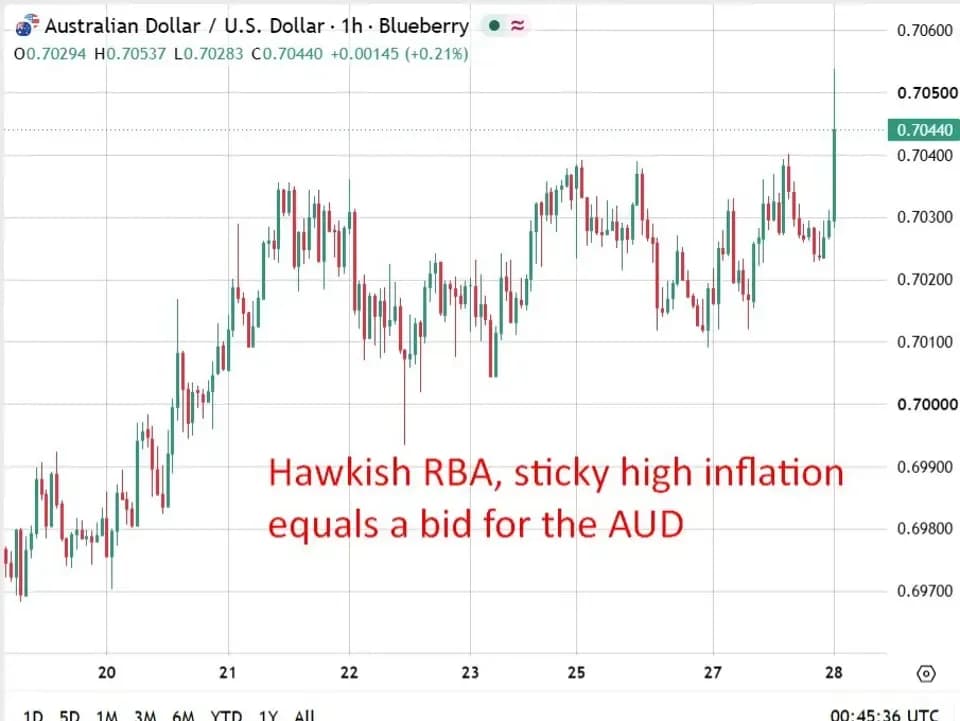
The Reserve Bank of Australia's trimmed mean CPI increased to 3.7% year-on-year in Q3, surpassing forecasts. This rise, attributed to higher energy prices, supports expectations for a rate hike during the RBA's upcoming meeting on November 2 and 3.
Inflation Data Overview
Australia's core inflation has unexpectedly risen, with the trimmed mean Consumer Price Index (CPI) for the third quarter increasing to 3.7% year-on-year, higher than the anticipated 3.6%. This figure is significant as it comes just before the Reserve Bank of Australia's (RBA) Board meeting scheduled for November 2 and 3.
Key Statistics
- Q3 Trimmed Mean CPI:
- Quarter-on-Quarter: Increased by 1.0% (forecast was 1.0%, previous was 0.8%)
- Year-on-Year: Increased by 3.7% (forecast was 3.6%, previous was also 3.6%)
- Q3 Headline CPI:
- Quarter-on-Quarter: Increased by 1.3% (forecast was 1.2%, previous was 0.6%)
- September CPI:
- Month-on-Month: Increased by 0.8% (forecast was 0.7%)
- Year-on-Year: Increased to 4.3% (forecast was 4.2%, previous was 4.0%)
- Monthly Trimmed Mean:
- Increased by 0.3% month-on-month, holding at 3.6% year-on-year.
Implications for Monetary Policy
RBA Governor Michele Bullock, speaking before the Senate, indicated that inflation is likely to exceed previous forecasts due to rising energy prices linked to geopolitical tensions. These developments are raising concerns about the effectiveness of previous monetary tightening measures.
The RBA’s reliance on the trimmed mean CPI as a core inflation gauge suggests that the rise in inflation is not confined to energy prices alone, indicating broader price pressures in the economy. The upcoming RBA meeting will include a review of updated inflation forecasts, which may influence the decision on further monetary tightening.
This article is for information only and is not investment advice.