
Japan's Trade Deficit Halved as Exports Surge 20.5% in October
Written with artificial intelligence.
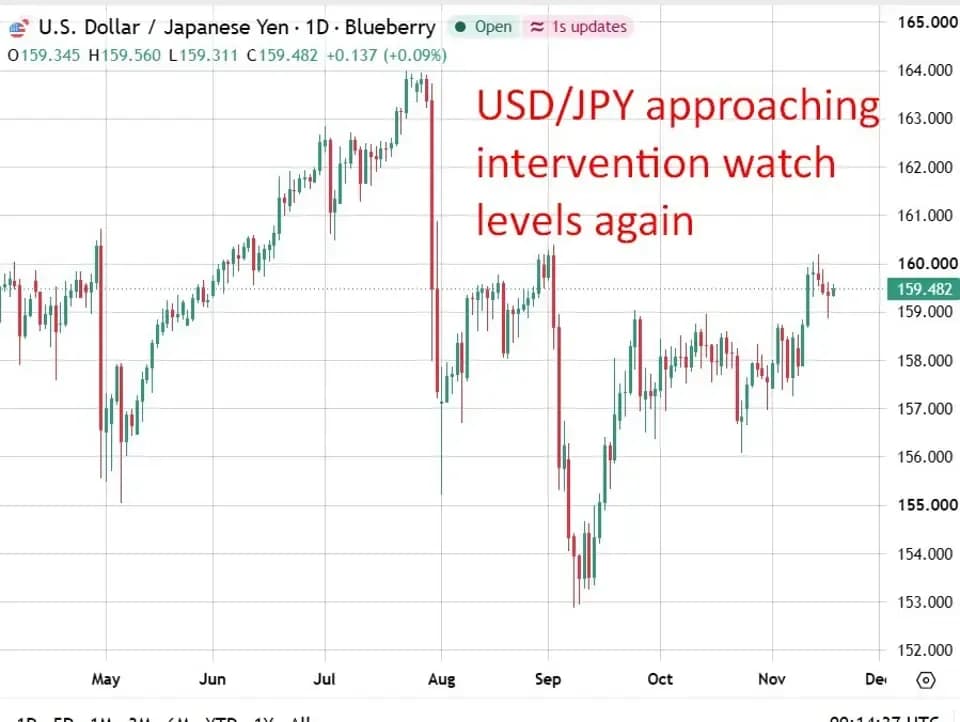
Japan's trade deficit for October was approximately ¥477 billion, significantly lower than the expected ¥1 trillion, driven primarily by a 20.5% increase in exports. However, the yen remains influenced more by international factors than domestic data, particularly due to ongoing U.S. Federal Reserve policies.
Trade Deficit Details
Japan's trade deficit for October came in at around ¥477 billion, roughly half of the anticipated ¥1 trillion. This improvement was largely due to a 20.5% year-on-year increase in exports, exceeding forecasts of about 20% and marking a notable rise from September's revised figure of 16.5%. In contrast, imports saw a 21.6% rise, which was below expectations of approximately 26% following an 18.5% increase in September.
Impact on the Yen and Bank of Japan
Despite the narrower deficit being mildly supportive for the yen by reducing the amount of yen sold for imports, the currency continues to be heavily affected by rate differentials with the United States. Currently, the USD/JPY is trading around 159.5, close to the critical 160 level that has prompted warnings of potential intervention from Tokyo. With the Federal Reserve maintaining a hiking trend and U.S. 10-year yields above 5%, the yen's outlook remains pressured.
The data also presents a case for the Bank of Japan (BOJ) to consider raising rates from the current 1.25% in December, especially as underlying inflation has reached the 2% target. BOJ Governor Kazuo Ueda indicated strong prospects for a rate hike, supported by solid exports that help mitigate a slight contraction in third-quarter GDP.

Future Considerations
The next significant indicator for the Japanese economy will be the national inflation data set to be released on Friday. A strong inflation reading, in conjunction with the trade figures, could enhance expectations for a rate hike. Conversely, any rise in oil prices could quickly reverse the recent improvements in the trade deficit, as Japan imports nearly 90% of its energy needs and remains vulnerable to fluctuations in crude prices due to geopolitical tensions.
This article is for information only and is not investment advice.